
Best Ceiling Fans for Living Room (2026): Size, Airflow & Style Guide
A living room ceiling fan does more than improve airflow. It can affect how comfortable the room feels during movie nights, family gatherings, quiet evenings, and everyday relaxing at home.
The right fan should match your room size, ceiling height, lighting needs, and interior style without making the space feel crowded or visually heavy.
Quick Answer: For most standard living rooms between 150 and 300 square feet, a 52-inch ceiling fan with light and a quiet DC motor offers the best balance of airflow, comfort, and visual proportion. Larger open-concept living rooms may need 60-inch or 72-inch ceiling fans for better circulation.
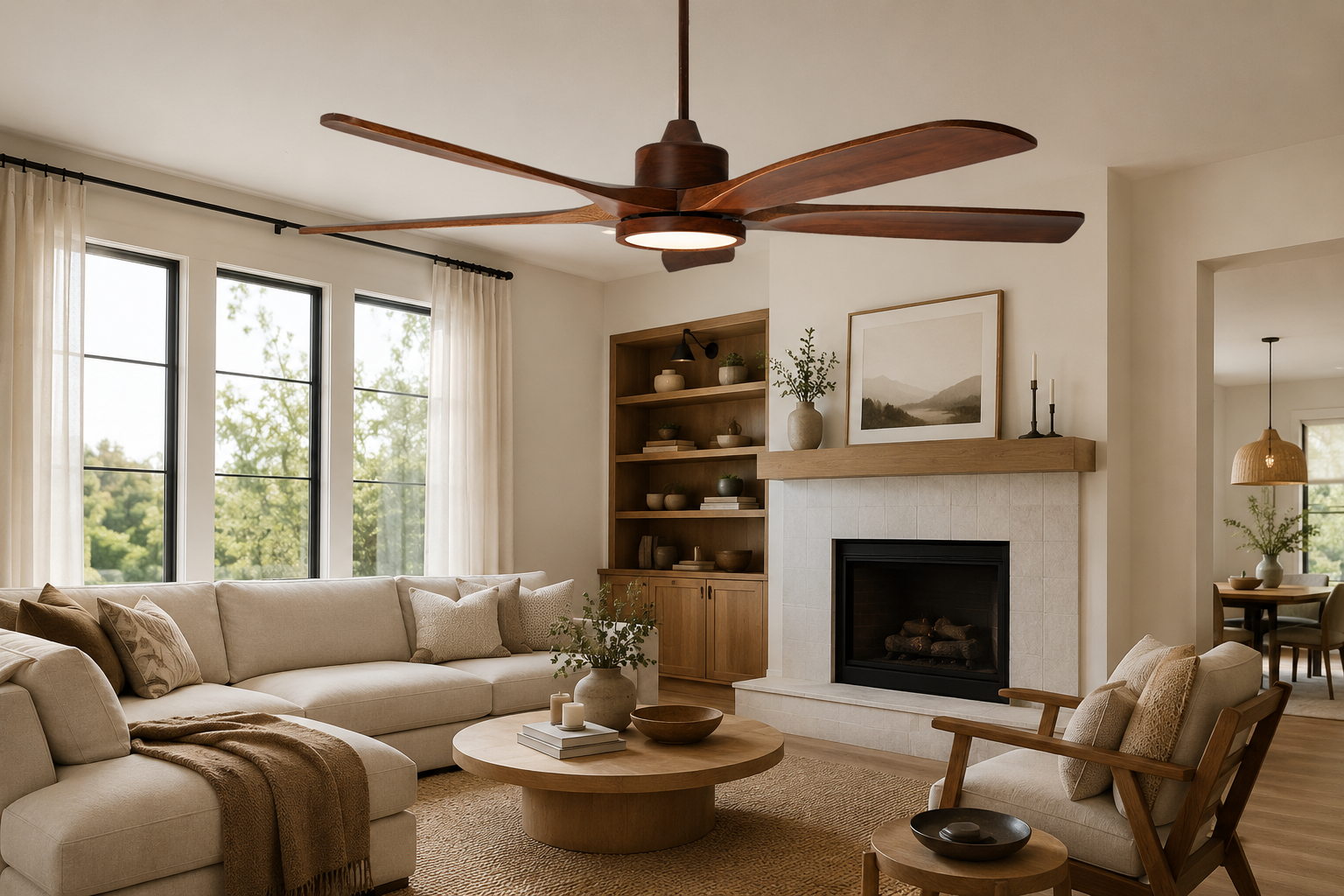
Best Ceiling Fans for Living Rooms in 2026
The best ceiling fans for living rooms in 2026 are not just about cooling. A good living room fan should combine strong airflow, quiet performance, useful lighting, and a design that feels natural in the space.
For most living rooms, the most practical choice is a ceiling fan with a downrod mount, integrated LED light, quiet DC motor, and a blade span between 52 and 60 inches.
If your living room connects to a kitchen, dining area, or vaulted ceiling space, a larger 72-inch ceiling fan may help move air more evenly across the entire seating area.
What Makes a Good Living Room Ceiling Fan?
Living rooms usually need stronger airflow than bedrooms or small home offices. Since this is often one of the largest and most visible spaces in the home, comfort, lighting, and style all matter.
- Strong airflow for larger shared spaces
- Quiet operation for watching TV or relaxing
- Integrated lighting for everyday illumination
- A design that matches the room’s interior style
- Proper mounting height for balanced airflow
Many homeowners choose a fan that looks good but is too small for the room. The result is often weak airflow, uneven cooling, and a living room that still feels warm in summer.
Best Ceiling Fan Sizes for Living Rooms
Choosing the correct ceiling fan size is one of the most important parts of improving airflow in a living room. A fan that is too small may struggle to circulate air evenly, especially around a sofa area or open seating layout.
| Living Room Size | Recommended Fan Size | Best Application |
|---|---|---|
| Up to 150 sq ft | 44–48 inches | Small apartments or compact living rooms |
| 150–300 sq ft | 52 inches | Most standard living rooms |
| 300+ sq ft | 60–72 inches | Large or open-concept spaces |
If you are unsure which fan size fits your room, read our ceiling fan size guide for more detailed recommendations.
Why 52-Inch Ceiling Fans Are the Most Popular for Living Rooms
For most standard living rooms, a 52-inch ceiling fan offers the best combination of airflow, lighting coverage, and visual balance. It is large enough for daily comfort but not so large that it overwhelms a typical family room or TV area.

52-Inch Solid Wood Ceiling Fan With Light
This 52-inch solid wood ceiling fan is a practical choice for medium-sized living rooms, family rooms, and TV spaces.
- Best for 150–300 sq ft living rooms
- Quiet DC motor
- Integrated LED light
- Downrod mount for balanced airflow
Best Ceiling Fans for Large Living Rooms
Large living rooms and open-concept layouts often require stronger airflow than standard spaces. In rooms with vaulted ceilings or connected dining and kitchen areas, smaller fans may leave some seating areas feeling warmer than others.
For larger spaces, a 60-inch fan is often a better fit because it provides wider airflow coverage while still looking balanced in the room.

60-Inch Solid Wood Ceiling Fan With Light
A 60-inch ceiling fan provides wider airflow coverage for larger living rooms while keeping a warm, modern look.
- Ideal for larger living rooms
- Solid wood blade design
- Integrated light for daily use
- Quiet and efficient DC motor

72-Inch Solid Wood Ceiling Fan With Light
For expansive open-concept living rooms, a 72-inch fan offers stronger circulation and better coverage across oversized seating areas.
- Best for 300+ sq ft spaces
- Great for vaulted ceilings
- Large solid wood blades
- Downrod mount for stronger airflow
Why Ceiling Fans With Lights Are Popular for Living Rooms
Ceiling fans with integrated lighting are popular in living rooms because they combine airflow and everyday illumination in one fixture.
This is especially useful in apartments, family rooms, and open-concept homes where the fan may also serve as part of the main lighting plan.
- Brightness for everyday use
- Dimmable lighting options
- Warm color temperature for comfort
- Remote control functionality
- Integrated LED efficiency
Quiet Ceiling Fans for TV Rooms and Family Spaces
Noise level matters more in living rooms than many homeowners expect. During movie nights, conversations, or quiet evenings, a noisy ceiling fan can quickly become distracting.
DC motor ceiling fans are usually quieter and more energy-efficient than traditional AC motor models. They also provide smoother speed control and better low-speed airflow for everyday comfort.
Downrod vs Flush Mount Ceiling Fans for Living Rooms
For most standard living rooms with 9-foot ceilings or higher, downrod ceiling fans usually provide better airflow and more balanced visual proportions than flush mount fans.
Flush mount fans are still useful for apartments or lower ceilings, but larger living rooms usually benefit from the extra airflow space created by a downrod installation.
| Ceiling Height | Recommended Mounting Type | Best Choice |
|---|---|---|
| 8 ft | Flush mount | Low ceiling apartments |
| 9 ft | Short downrod | Most standard living rooms |
| 10 ft+ | Downrod | Open-concept and vaulted spaces |
For a more detailed comparison, read our flush mount vs downrod ceiling fan guide .
Modern Ceiling Fan Styles for Living Rooms
In many homes, the ceiling fan is one of the most visible fixtures in the living room. Modern ceiling fans often use clean lines, solid wood blades, matte finishes, and integrated lighting.
Wood ceiling fans are especially popular in modern farmhouse, Scandinavian, and contemporary interiors because they add warmth and texture without overwhelming the room visually.
Living Room Ceiling Fan FAQs
What size ceiling fan is best for a living room?
A 52-inch ceiling fan is the most popular choice for standard living rooms between 150 and 300 square feet. Larger living rooms may need 60-inch or 72-inch fans.
Are ceiling fans with lights good for living rooms?
Yes. Ceiling fans with integrated lights are popular in living rooms because they combine airflow and lighting in one fixture.
Is a downrod ceiling fan better for a living room?
In most cases, yes. Downrod ceiling fans generally provide better airflow and visual balance in living rooms with 9-foot ceilings or higher.
Are DC motor ceiling fans quieter?
Yes. DC motor ceiling fans are usually quieter and more energy-efficient than traditional AC motor models.
How many ceiling fans does a large living room need?
Most living rooms only need one properly sized ceiling fan. Very large open-concept spaces may benefit from two smaller fans instead of one oversized model.
Find the Right Ceiling Fan for Your Living Room
Explore solid wood ceiling fans with integrated lighting, quiet DC motors, and multiple size options for standard, large, and open-concept living rooms.
Shop Living Room Ceiling Fans


