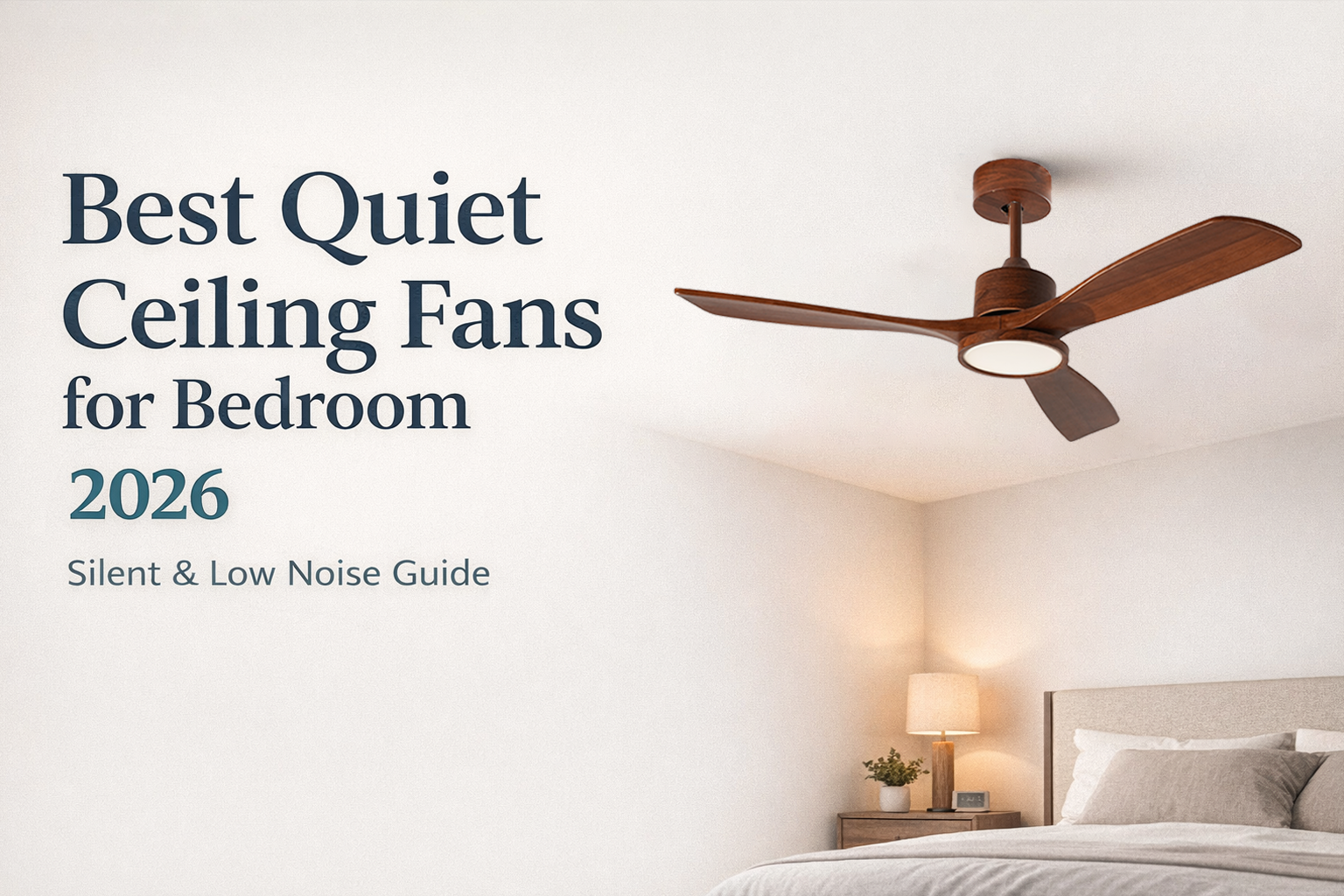
If you're looking for a quiet ceiling fan for bedroom use, the best choice is usually a DC motor ceiling fan. These fans run much quieter than traditional models, making them ideal for light sleepers and anyone sensitive to noise at night.
Most silent ceiling fans operate below 30–35 dB, which is similar to a whisper. In this guide, we’ll explain what makes a ceiling fan quiet, how to choose the right model, and which options work best for different bedroom sizes and ceiling types.
The quietest ceiling fans for bedrooms typically use DC motors, balanced blades, and stable mounting systems. Look for models designed for low noise operation (under 35 dB), smooth airflow, and features like remote control, reversible airflow, and integrated lighting if needed.
A quiet ceiling fan can make a big difference in your sleep quality. In a bedroom, even small noises can feel distracting at night, especially for light sleepers. A low-noise fan helps create a calmer and more comfortable environment.
In a real bedroom setting, a quiet ceiling fan helps create a restful atmosphere without the humming, clicking, or vibration that some standard fans can produce.
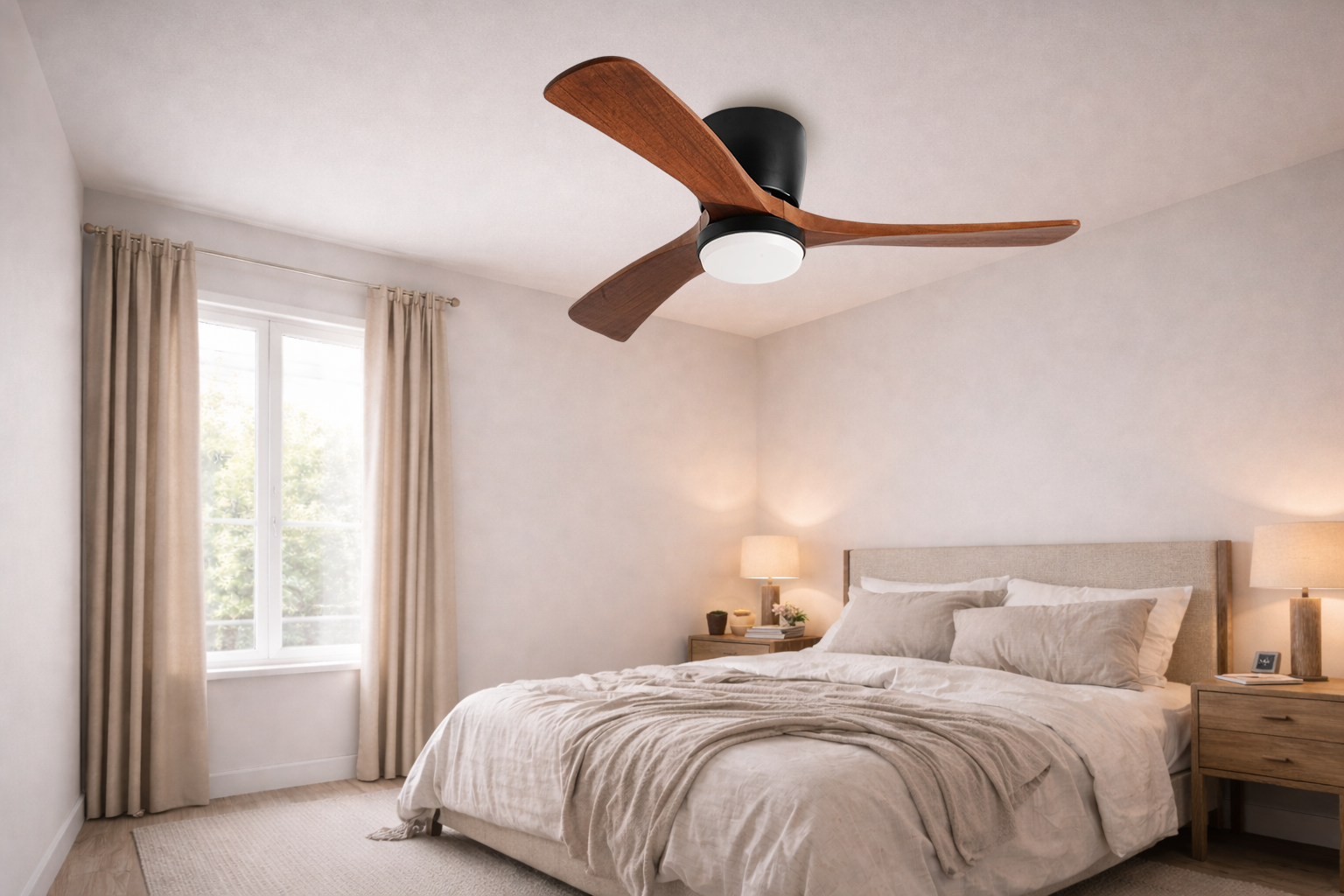
Unlike regular fans, quiet ceiling fans are designed to reduce motor noise, airflow disturbance, and vibration. This makes them a better choice for bedrooms, guest rooms, and other spaces where comfort and sleep matter most.
We evaluated noise level, motor type, airflow performance, and real bedroom usability to identify the quietest ceiling fan options for bedroom use.
Here are some of the best quiet ceiling fan options based on room size, ceiling height, and installation type:
| Type | Best For | Key Feature |
|---|---|---|
| 42" Fan with Light | Small bedrooms | Ultra quiet + lighting |
| 52" Downrod Fan | Medium rooms | Better airflow |
| Flush Mount Fan | Low ceilings | Compact & silent |
Perfect for small bedrooms and light sleepers, this fan combines quiet performance with built-in lighting for everyday comfort.
This model is a strong choice for larger bedrooms where airflow coverage matters more. The downrod design helps improve air circulation in rooms with standard ceiling height.
If your bedroom has a lower ceiling, a flush mount fan is often the best solution. It keeps the profile compact while still providing quiet airflow and a clean look.
| Feature | Quiet Ceiling Fan | Regular Fan |
|---|---|---|
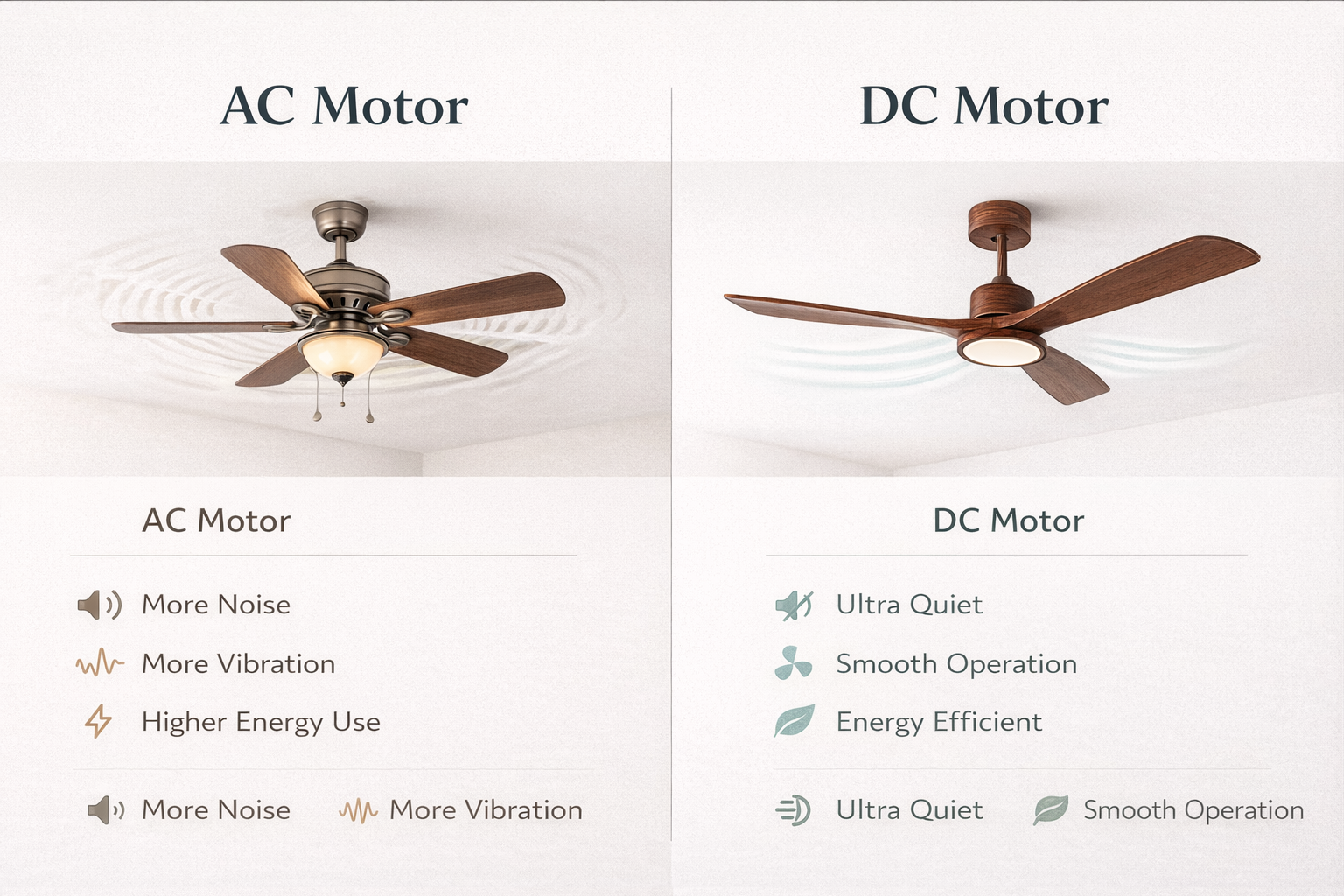
| Motor Type | DC Motor | AC Motor |
| Noise Level | Low (under 35 dB) | Moderate to loud |
| Sleep Friendly | ✔ Yes | ✖ No |
| Energy Efficiency | High | Medium |
Even a well-designed fan can become noisy if it is installed incorrectly. A stable mount and properly balanced blades are just as important as the motor itself.
If your current bedroom fan makes any of these sounds, upgrading to a quiet DC ceiling fan can noticeably improve comfort.
Not sure about sizing? Read our ceiling fan size guide for more details.
Fans operating under 35 dB are generally considered quiet enough for bedrooms.
Yes. DC ceiling fans are usually quieter, smoother, and more energy-efficient than traditional AC models.
Yes. If the fan uses a DC motor, adding a light does not usually increase operational noise in any noticeable way.
Noise is often caused by loose screws, blade imbalance, vibration, or installation issues rather than the fan size itself.
Choosing the right quiet ceiling fan for bedroom use can improve both comfort and sleep quality. Focus on DC motors, stable installation, and the right fan size for your room.
For a more complete overview of ceiling fan size, lighting options, and room matching, check our ceiling fan buying guide.
Browse more options in our Ceiling Fan Collection and find the right silent fan for your home.


