
How to Choose Between Wood and ABS Ceiling Fan Blades
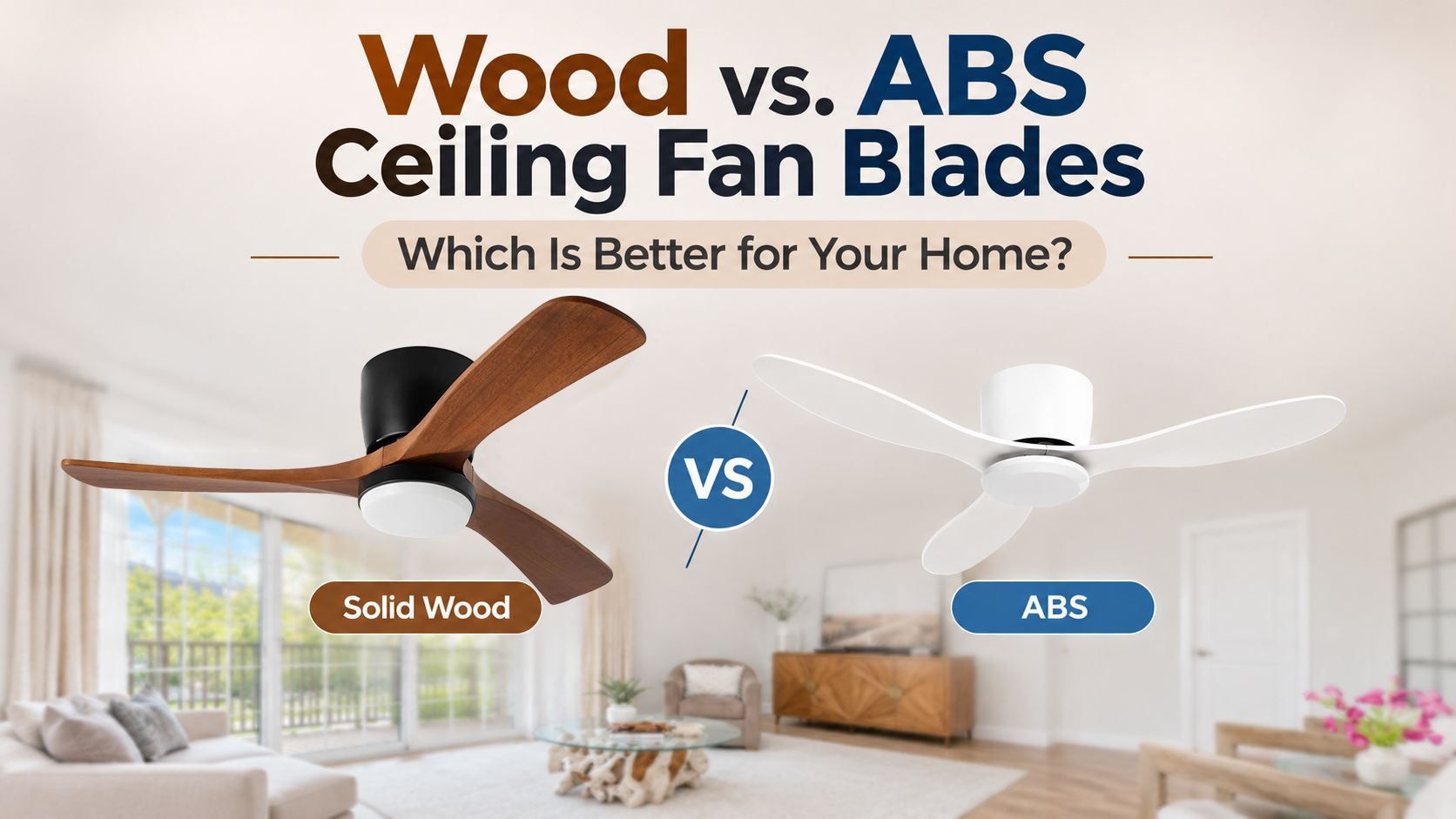
If a ceiling fan is labeled “Walnut,” does that mean its blades are made from walnut wood? Not necessarily. Terms such as Walnut, Oak, and Woodgrain may describe a color or finish rather than the material itself. Wood grain ceiling fan blades can look similar while being made from solid wood, plywood, MDF, or ABS with a faux wood finish. Beyond appearance, it helps to consider the blade material, care requirements, and intended installation environment.
Should You Choose Solid Wood or ABS Blades?
If you love natural wood grain and want a ceiling fan that complements wood furniture or warm-toned interiors, solid wood blades are worth considering. If you prefer easy cleaning, contemporary shapes, or a wood-look finish, ABS blades may be a better fit. The best material for ceiling fan blades depends on your style and practical needs. Start by checking the product’s “Blade Material” specification, then narrow your options based on the room and installation requirements.
Note: This comparison describes general material characteristics. For airflow, approved installation locations, and maintenance instructions, always refer to the specifications and manual for the complete fan.
1. What Are the Most Common Ceiling Fan Blade Materials?
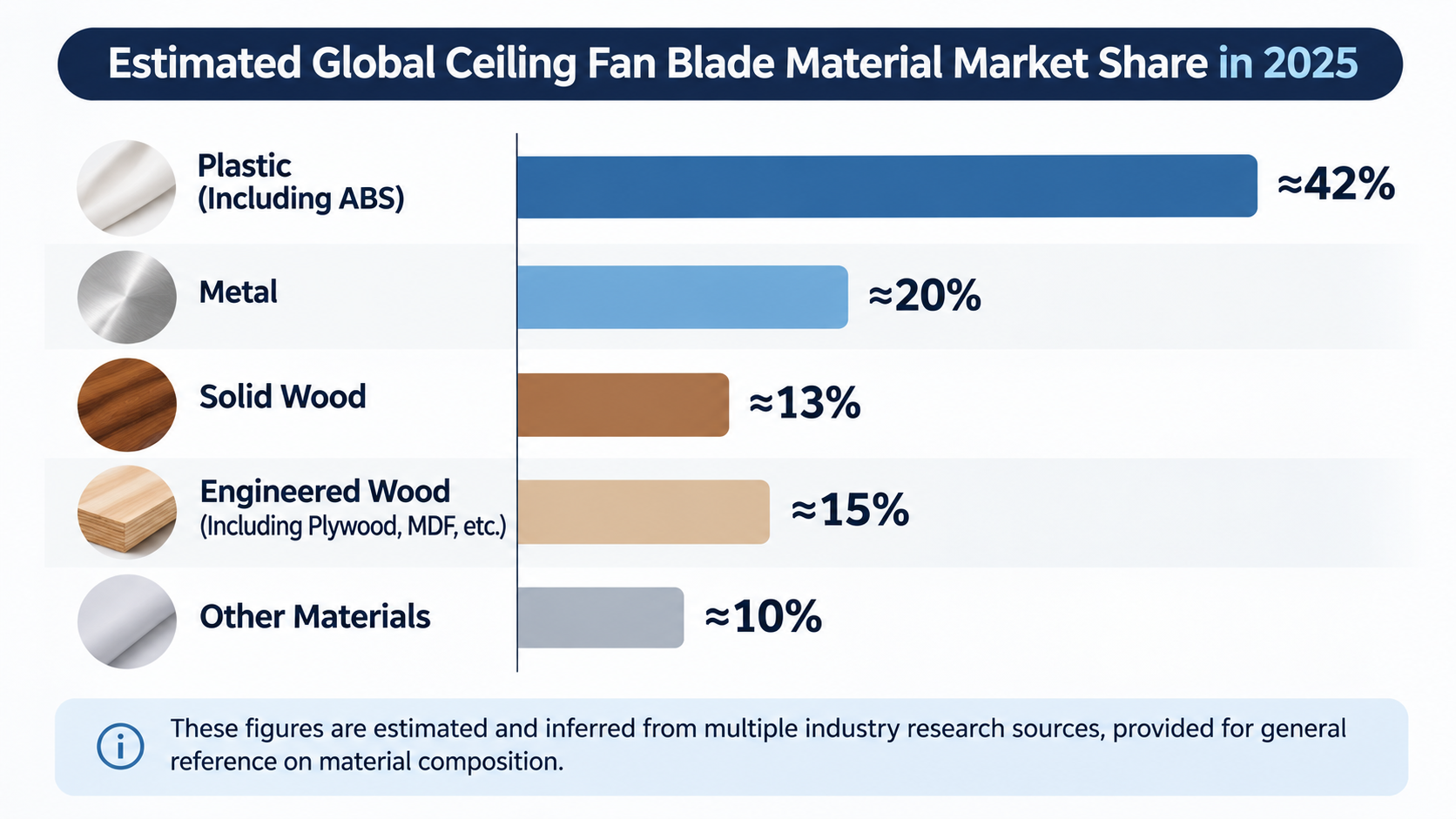
Common ceiling fan blade materials include plastics, solid wood, engineered wood, and metal. Each offers different options for appearance, manufacturing, and everyday care. The chart below presents an estimated breakdown of blade materials in the global ceiling fan market in 2025.
1. Plywood and MDF: Common Engineered Wood Options
Plywood is made by bonding layers of wood veneer; three-ply plywood is one type. MDF (medium-density fiberboard) is made from wood fibers bonded with resin. Both can be finished with veneers or paint to create a wood-grain appearance, making them difficult to distinguish from solid wood at a glance.
Some lightweight plywood constructions can be used to make relatively light fan blades, but not every plywood blade is lighter than a solid wood blade. Actual weight depends on the wood species, thickness, and construction. Where bonding, edge sealing, or surface finishing is inadequate, prolonged moisture exposure or significant changes in temperature and humidity may contribute to warping, deformation, delamination, or peeling finishes.
2. Metal Blades: A Contemporary or Industrial Look
Metal blades, including aluminum-alloy designs, are often used in fans with clean lines or an industrial aesthetic. Surface treatments can provide different colors and finishes. For humid, coastal, or outdoor settings, check the protective finish and the rating of the complete fan. Metal blades do not automatically mean greater airflow or more noise.
3. Solid Wood and ABS: Two Different Design Priorities
Solid wood offers natural grain and an authentic wood appearance. ABS can be molded into different shapes and finished in solid colors or wood-look patterns. The choice often comes down to the look you prefer and how you want to maintain your fan. We explore both options below.
4. How Can You Tell Whether Wood-Grain Blades Are Real Wood?
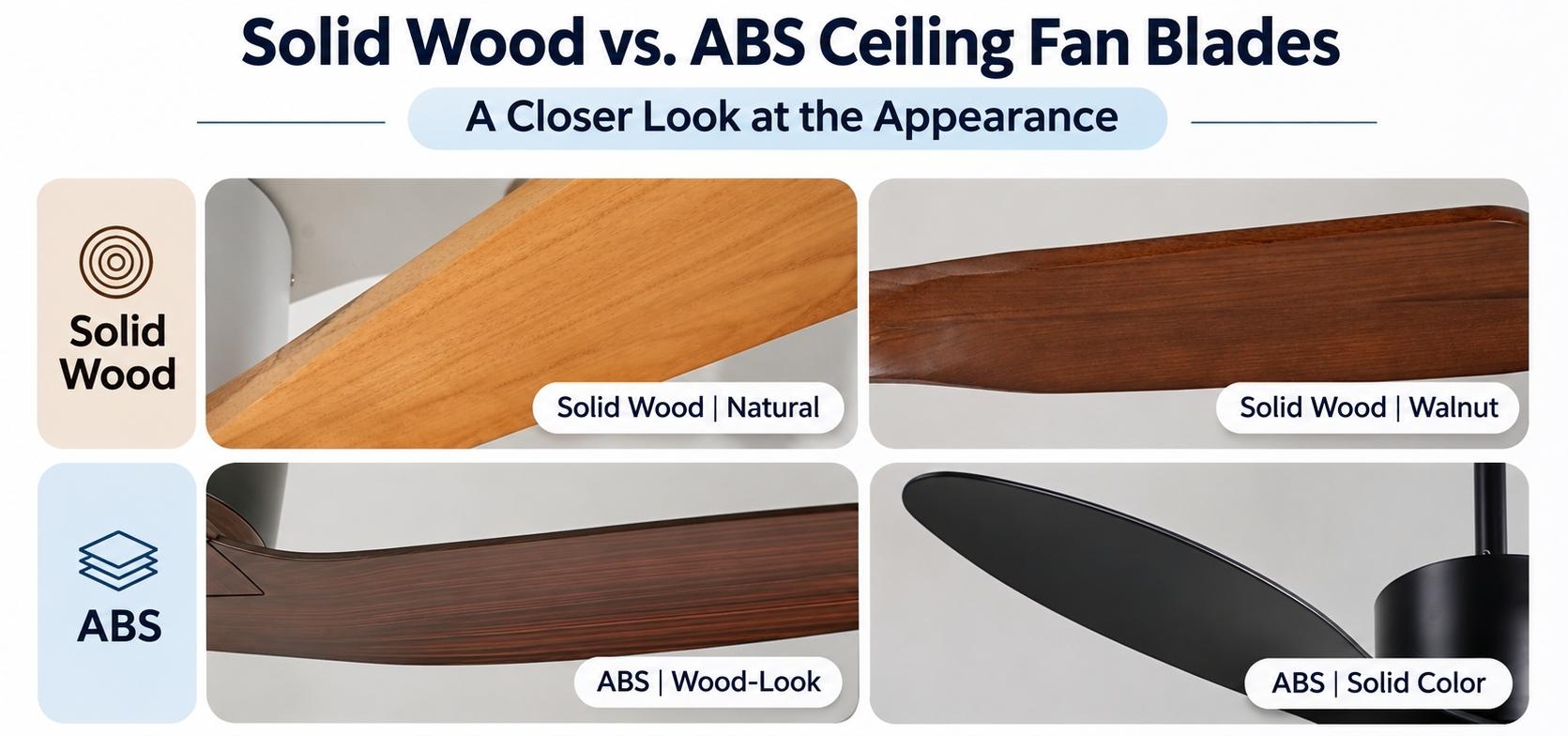
Light wood, natural wood, walnut, and dark wood finishes are common ceiling fan styles. However, names such as Walnut, Oak, or Woodgrain may refer only to the color or finish, not the actual wood species. Even a product described as a “natural wood ceiling fan” should be checked against its material specifications. Look for “Blade Material” in the product details—such as Solid Wood, ABS, Plywood, or MDF—and ask the seller if it is not clearly stated.
2. Why Choose Solid Wood Ceiling Fan Blades?
1. Natural Wood Grain Adds Character
The grain in solid wood ceiling fan blades comes from the wood itself. Because wood grows naturally, even blades made from the same species may show subtle differences in grain and color. Real wood can complement hardwood floors, wood furniture, woven accents, and warm-toned interiors. For homeowners who value natural materials and a more individual look, wooden ceiling fan blades offer a distinctive decorative touch. Unlike imitation wood finishes, solid wood blades feature natural grain patterns that vary from piece to piece.
2. The Craftsmanship Behind Solid Wood Blades
Solid wood blades generally go through material selection, shaping, sanding, and finishing. Paulownia is one wood species that can be used for ceiling fan blades; it is relatively lightweight and easy to work with.
Because natural wood varies in grain and color, its characteristics need to be considered during production. For special wood species, sizes, or custom designs, lead times may also depend on material availability and processing requirements.
Alongside standard solid wood models, CeilingFanHub can discuss available customization options based on specific project needs.
Behind-the-scenes: CeilingFanHub solid wood blade craftsmanship.
Watch on YouTube ↗3. Sustainability and Finishing
Wood is a naturally renewable material, and solid wood fan blades typically undergo sanding and surface coating. Depending on the coating system and how it is applied, primers and protective topcoats may help reduce the effects of moisture and everyday scratches on the wood surface. Any UV-protection claims should be based on the performance of the actual coating. The use of natural wood does not, by itself, mean that the complete fan has an environmental certification.
A solid wood ceiling fan paired with an efficient DC motor can also combine a natural wood appearance with energy-conscious operation.
4. Caring for Solid Wood Blades
Wood absorbs and releases moisture as humidity changes. When shopping, check the wood species, finish, and care instructions. Avoid soaking the blades or spraying them directly with water, and make sure the fan is approved for its intended installation location.
Actual product showcase: solid wood ceiling fan W2352P154687.
Watch on YouTube ↗3. Why Choose ABS Ceiling Fan Blades?
1. Flexible Shapes and a Wide Range of Finishes
ABS (acrylonitrile butadiene styrene) is a thermoplastic that can be molded into a variety of blade shapes and curves. It can be formed into different blade profiles and curves, with finishes such as black, white, or wood-look patterns. Compared with the natural variation in solid wood, ABS blades can more easily achieve a consistent shape and surface appearance. This makes them a practical design option for contemporary interiors or rooms where a coordinated finish matters.
2. Well Suited to Standardized Production
Unlike solid wood blades, which require wood selection, shaping, and sanding, ABS blades are generally produced using molds. Once tooling and production processes are established, molding can support efficient, standardized manufacturing.
This approach can help maintain consistency across production runs and accommodate larger orders. Actual production and delivery times still depend on order volume, finishing requirements, and factory schedules.
3. Easy Everyday Cleaning Without Wood-Like Swelling
ABS is a thermoplastic, so it does not absorb moisture and swell in the same way that wood can. For routine cleaning, a soft cloth is generally suitable when used in accordance with the manufacturer’s instructions.
Actual product showcase: ABS ceiling fan W2352P315326.
Watch on YouTube ↗4. Solid Wood vs. ABS Blades: Key Differences at a Glance
Wood vs. plastic ceiling fan blades: in this comparison, “plastic” refers specifically to ABS.
| Feature | Solid Wood | ABS Plastic |
|---|---|---|
| Product example | 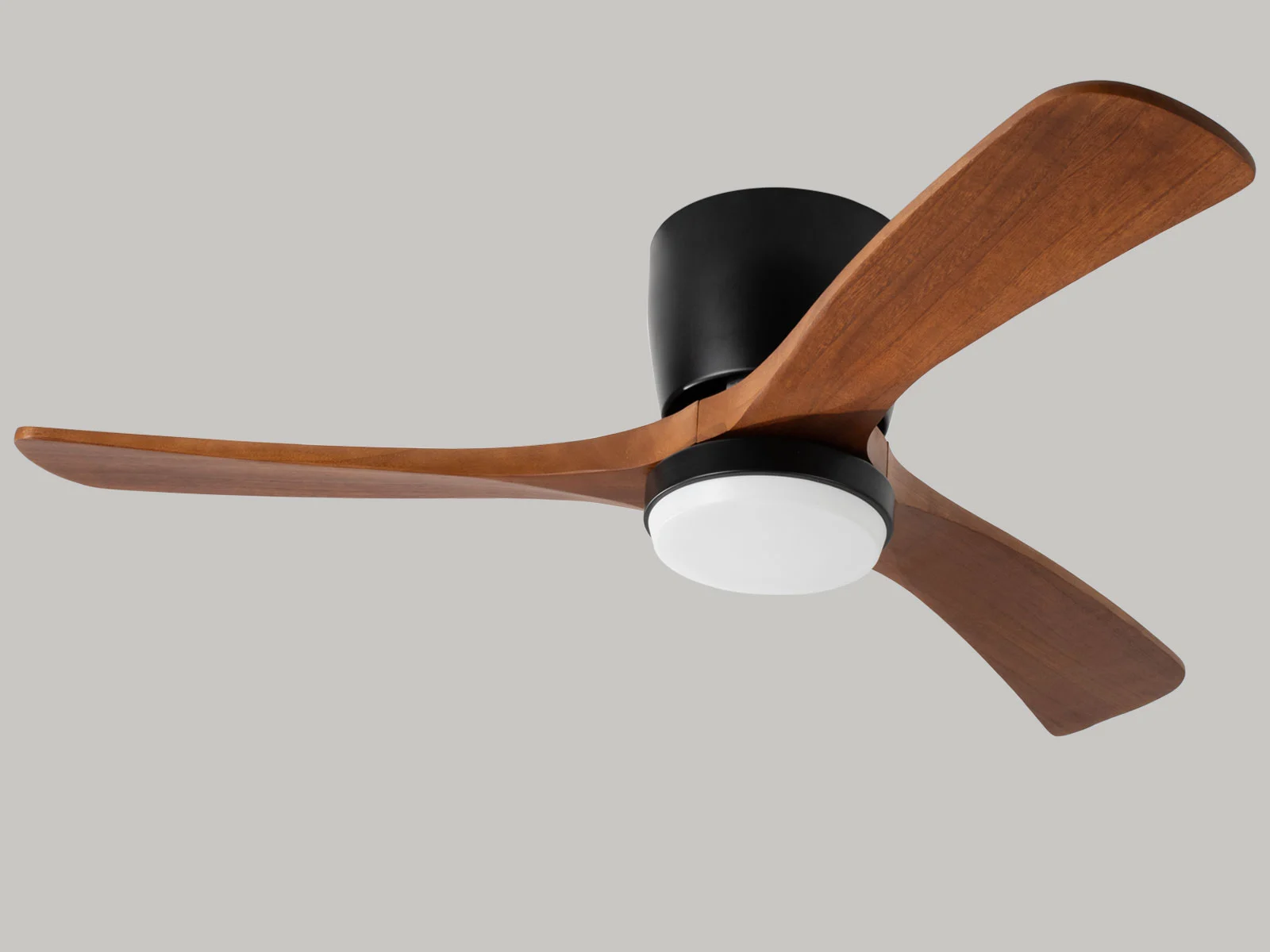 |
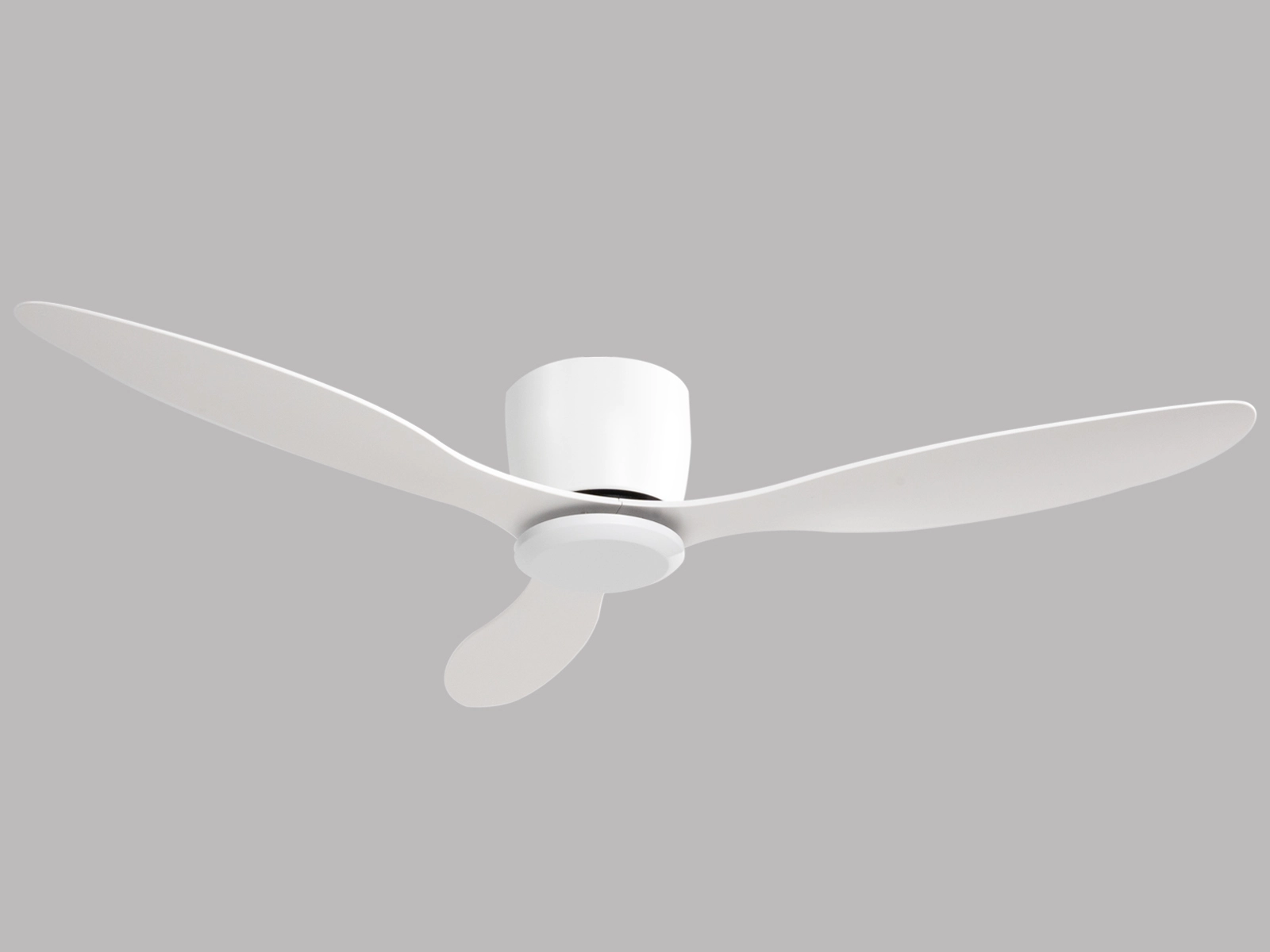 |
| Appearance | Natural grain and subtle color variation | Solid colors, modern curves, or wood-look finishes |
| Manufacturing | Wood shaping, sanding, and surface finishing | Molding and surface finishing |
| Response to humidity | Absorbs or releases moisture as humidity changes; finish matters | Does not undergo wood-like moisture swelling |
| Routine care | Protect the wood finish; avoid prolonged soaking | Usually wipe with a soft cloth as directed |
| Best suited to | Natural material character and wood-inspired interiors | Modern shapes, consistent finishes, and easy cleaning |
5. Frequently Asked Questions
1. Can a Ceiling Fan with ABS Blades Be Installed in a Bathroom or Outdoors?
Not necessarily. Bathroom and outdoor suitability depend on the rating and approved installation conditions of the entire ceiling fan, not just the blade material. Even if ABS blades resist moisture-related swelling, confirm that the specific fan is approved for the intended environment.
2. How Should I Clean Solid Wood Ceiling Fan Blades?
Turn off the fan and wait until the blades stop completely. Then follow the product instructions, typically using a soft dry or slightly damp cloth. Avoid prolonged soaking, harsh cleaning chemicals, and spraying water directly onto the blades. Always follow the care instructions for your model.
3. Which Moves More Air: Solid Wood or ABS Blades?
You cannot determine airflow from blade material alone. If airflow is a priority, compare the CFM ratings of specific ceiling fan models rather than treating the blade material as a performance rating.
4. Are Wood-Grain Ceiling Fans Always Made with Solid Wood Blades?
No. A wood-grain appearance can also be created with ABS, plywood, or MDF finishes. Names such as Walnut and Oak sometimes refer only to a color or finish. Check the product’s stated blade material before buying.
5. Are Solid Wood Ceiling Fans Always More Expensive Than ABS Models?
Not necessarily. Selecting, shaping, and finishing solid wood may add to blade manufacturing costs, but the price of a complete ceiling fan also depends on the motor, lighting, brand, and other features. Blade material alone does not tell you which fan will cost more.
6. Final Thoughts: Choose Based on Material, Style, and Everyday Needs
If you value natural grain and the feel of real wood, start with solid wood ceiling fan blades. If you prefer contemporary shapes, consistent finishes, and straightforward cleaning, ABS blades are worth exploring. Whichever material you choose, consider room size, lighting needs, mounting style, and motor efficiency when comparing specific models.


